


 Language
 English
 русский
 Español
 Português
 Deutsch
 عربى
عربى italiano
 Türk
Türk हिंदी
हिंदी Indonesia
 Tiếng Việt
If you need any help, please feel free to contact us

What Makes High Quality Aluminum Cable Trays? Key Specs to Check Before You Buy
Content
- 1 What Makes High Quality Aluminum Cable Trays Different?
- 2 Alloy Grade and Temper Set the Strength Baseline
- 3 Wall Thickness, Tolerances, and Load Performance
- 4 Fabrication Details and Complete Fittings
- 5 Corrosion Protection That Matches the Environment
- 6 Manufacturing Consistency Is What You Actually Receive
- 7 A Practical Procurement Checklist
What Makes High Quality Aluminum Cable Trays Different?
An electrical contractor once asked us to review a low-price aluminum tray quotation for a coastal processing plant. The tray was made from a soft 6063 alloy with thin side rails and no documented load rating. It looked acceptable in a sample photo, but it would have sagged under the real cable load and allowed corrosion to start along exposed cut edges within the first year. That is the short version of what is at stake: the quality of an aluminum cable tray is determined before installation, by alloy and temper, dimensional control, surface protection, and the supplier's willingness to publish test data. This article looks at the specific factors that separate durable aluminum cable trays from cheaper lookalikes.
Alloy Grade and Temper Set the Strength Baseline
High-quality aluminum cable trays are usually made from 6061 or 6063 alloys. The alloy number matters, but the temper matters just as much. A tray made from 6061-T6 has a yield strength around 240 MPa in typical sheet thicknesses; a lower-temper alloy may be more cost-effective but will not return to shape after the same point load. If a supplier cannot state the exact alloy and temper on a material certificate, treat the load claim as unverified.
In industrial plants, long-span power distribution, and aggressive environments, aluminum alloy cable tray systems are often specified in 6061-T6 because they combine good strength with predictable corrosion behavior. In lighter commercial installations, 6063 extrusions can be adequate when spans are short and loads are modest. The right choice depends on your specific cable weight, support spacing, and environment, not on the word "aluminum" alone.
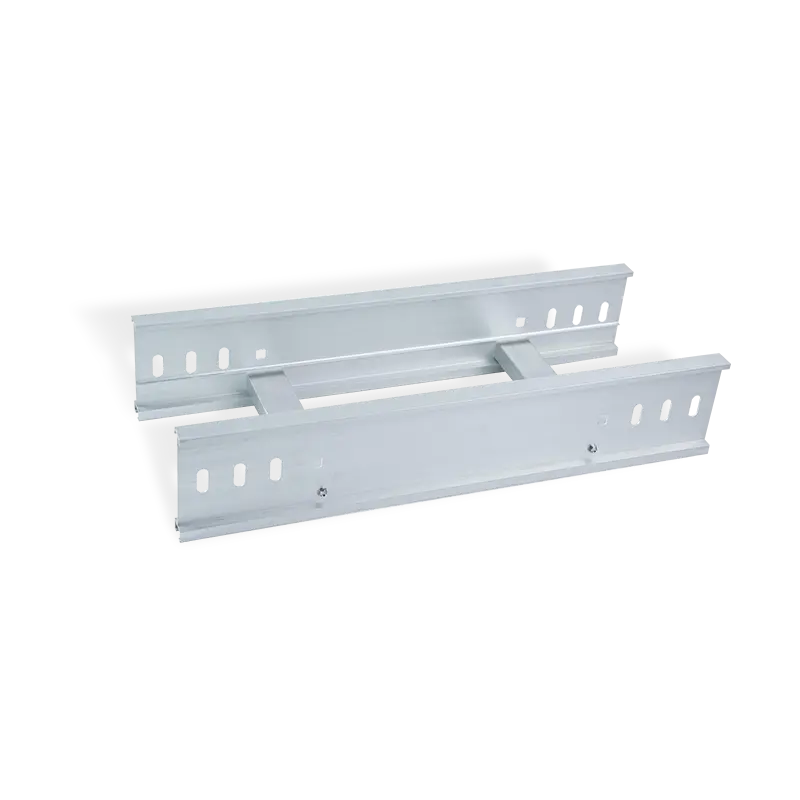
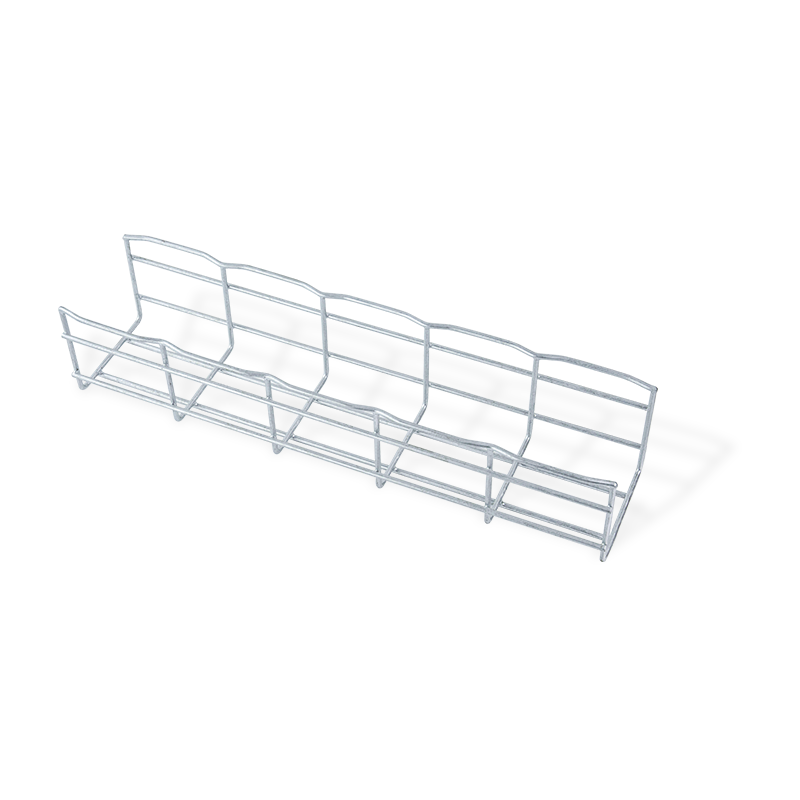 Custom Industrial Aluminum Alloy Cable Tray System ManufacturersJiangsu Youming Group Co., Ltd. is China Custom Industrial Aluminum Alloy Cable Tray System Manufacturers, Company, We Offer OEM/ODM Indu...View Product →
Why temper changes installation behavior
High-quality material holds its edge during rolling and forming. A soft, over-aged alloy can cause the side rail to bend during cutting, rung holes to deform during assembly, and splice plates to sit slightly out of square. Those small problems multiply across a long cable route.
Wall Thickness, Tolerances, and Load Performance
Thickness is only one part of the quality equation. The height of the side rail, rung spacing, and overall section geometry determine how much load a tray can carry at a given span. A tray made with 2.0 mm material can still fail if the side rail is too short or the rung spacing is too wide.
Ask for a load table for the exact tray width and span you intend to use. Reference methods such as NEMA VE 1 and IEC 61537 provide consistent test procedures, including maximum deflection limits. If the manufacturer only states a thickness and a vague "heavy duty" label, you cannot compare alternatives fairly.
| Material or finish | Typical application | Main advantage | Risk to check |
|---|---|---|---|
| 6061-T6 aluminum | Industrial power, long spans | High strength and good formability | Verify temper on the mill certificate |
| 6063-T5/T6 aluminum | Light commercial runs, short spans | Clean extruded profile | Lower stiffness under heavy cable loads |
| Anodized aluminum | Coastal, food, pharmaceutical | Hard surface and consistent appearance | Specify minimum coating thickness |
| Powder-coated aluminum | Outdoor and chemical exposure | Extra barrier against corrosive mist | Confirm cut-edge protection after drilling |
How tolerances affect the project schedule
Quality control is most visible at the joints. When two tray sections meet, splice plates should line up, side rails should be straight, and rung spacing should stay uniform. A tolerance of ±1 mm on tray width and ±2 mm on length is a reasonable expectation from a controlled rolling and assembly line. Wider tolerances create installation delays that are rarely captured in the material quote.
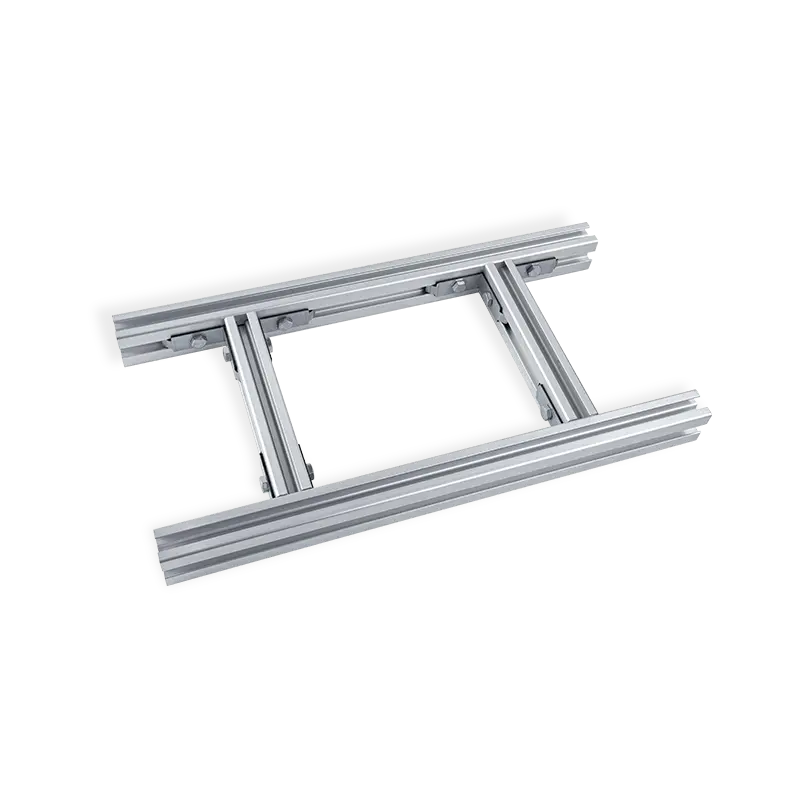
For installations where cable access and ventilation matter more than continuous bottom support, an aluminum cable ladder is a common alternative. The same quality checks apply: inspect rung spacing, side rail depth, and the strength of the rung-to-side-rail connection.
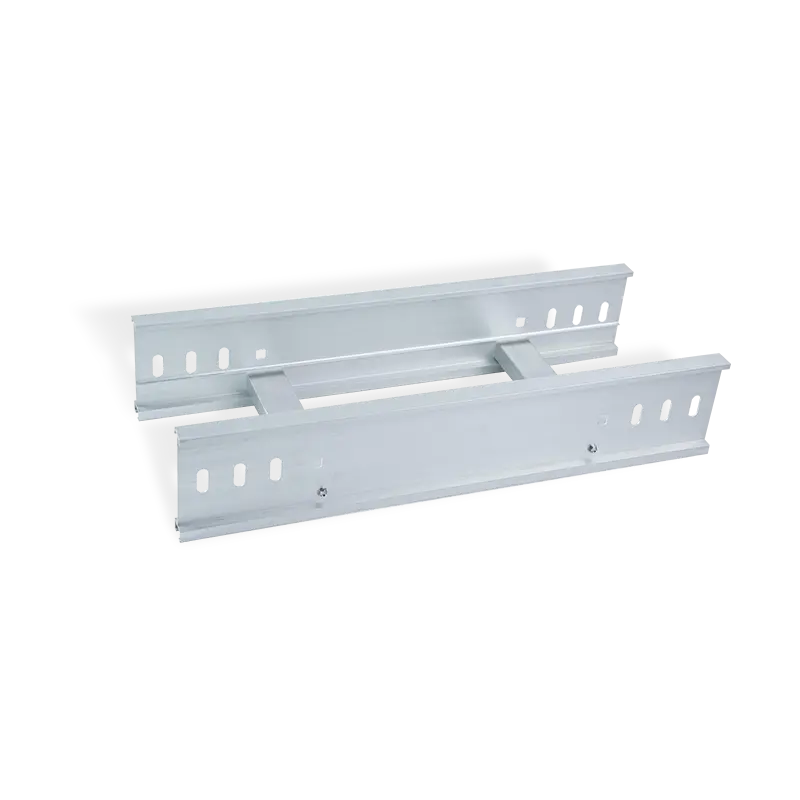 Custom Aluminum cable ladder Suppliers, FactoryJiangsu Youming Group Co., Ltd. is China Custom OEM/ODM Aluminum cable ladder Suppliers and Factory,Aluminum profile ladder cable tray, c...View Product →
Fabrication Details and Complete Fittings
A straight tray section is the simplest part of a cable management system. The real test of quality is how cleanly the tray connects to elbows, tees, reducers, risers, end caps, and splice kits. If the fittings are manufactured to the same profile and tolerance as the straight sections, cable bend radius remains controlled and installation moves quickly.
At the fabrication stage, look for deburred cut ends and smooth holes. Sharp edges can damage cable jackets and require extra field work. On trays with rungs, the joint between rung and side rail should be tight, whether it is welded or mechanically locked.
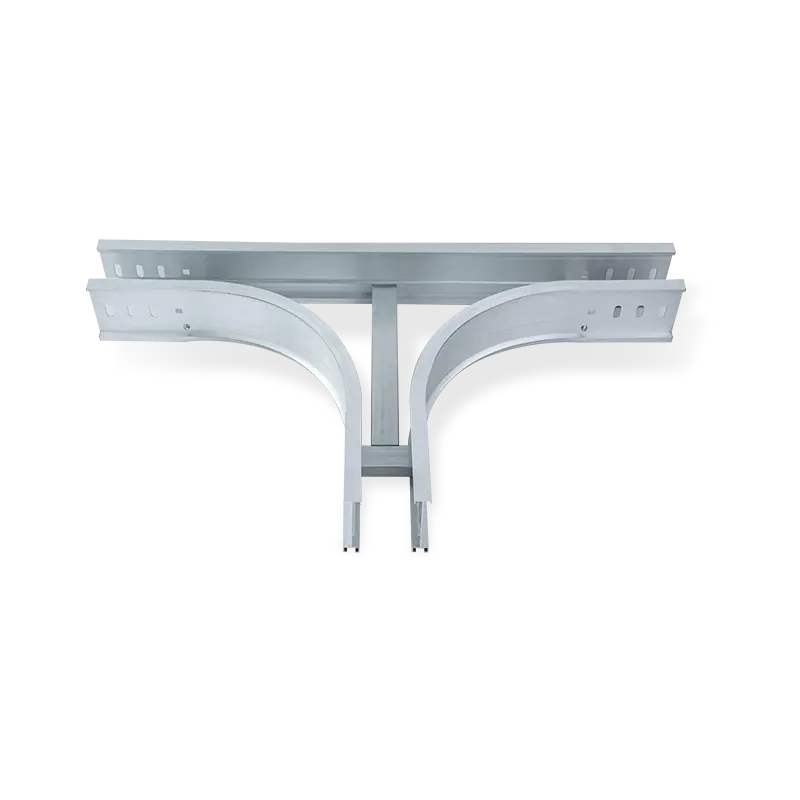
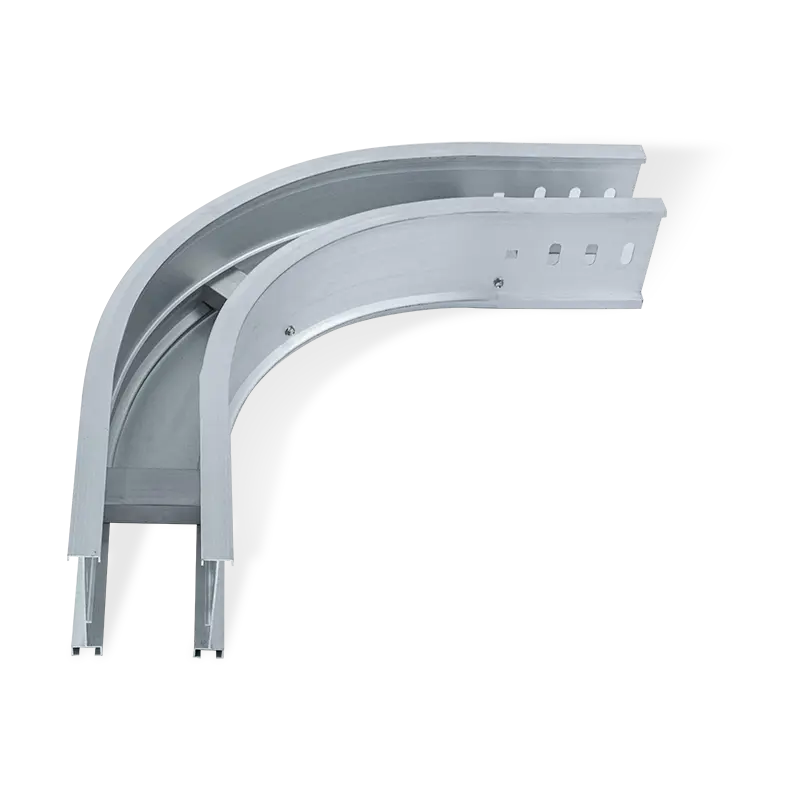
Through-type tray systems are a good example of why fitted accessories matter. The aluminum alloy cable trunking elbow and tee accessories are designed to match the parent tray, which reduces the risk of misaligned connections and damaged cable at the point of change of direction.
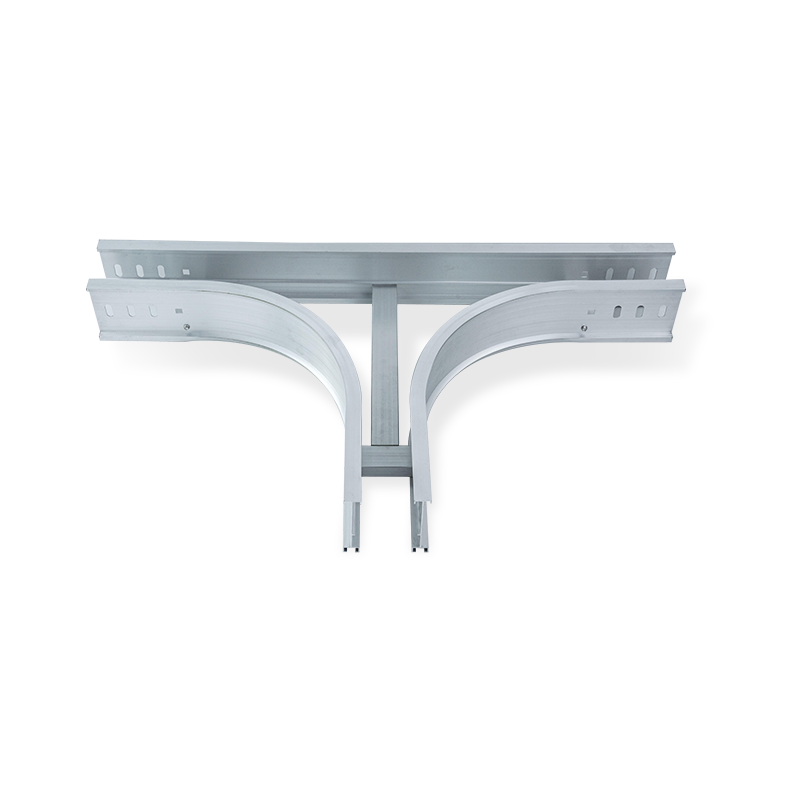 Custom Aluminum alloy cable trunking elbow tee accessories Suppliers, FactoryJiangsu Youming Group Co., Ltd. is China Custom OEM/ODM Aluminum alloy cable trunking elbow tee accessories Suppliers and Factory,Aluminu...View Product →
Bend radius is a non-negotiable detail
Every change of direction changes the path of the cable. A sharp edge on a horizontal bend can push a power cable's jacket against metal and create a long-term failure point. This is even more critical for fiber optic cables. If the system includes optical lines, specify bend radius protection and use accessories intended for fiber management.
Corrosion Protection That Matches the Environment
Aluminum can perform well in many environments, but it is not indestructible. In coastal air, chemical processing, or areas with high humidity, the surface finish is part of the structural design. A high-quality aluminum cable tray should have a consistent surface with no deep scratches, no white corrosion, and no flaking coating.
Ask these questions before ordering:
- What is the minimum anodizing thickness in microns?
- Has the finish been tested in a salt-spray chamber?
- How are cut ends and drilled holes protected if a barrier coating is used?
- Are stainless-steel fasteners required for the connection points?
If the tray will be cut or drilled on site, include touch-up coating in the specification. A tray that arrives with an excellent finish but is unprotected after field modification can fail in the same way as a cheap galvanized part. The project's engineering support should be able to provide coating data and installation guidance rather than a generic answer.
Manufacturing Consistency Is What You Actually Receive
A single sample proves very little. Project quality depends on thousands of identical parts, and that depends on production discipline. Coil grade, roll forming pressure, welding speed, coating parameters, and inspection frequency all influence the final product. A manufacturer with controlled manufacturing processes is more likely to deliver consistent dimensions across a large order.
Questions that reveal more than a brochure:
- How are heat numbers and material lots traced?
- How often are side rail height and width measured on the line?
- Is there a rung lock force test?
- How is finished material packaged to prevent transport damage?
A Practical Procurement Checklist
Before you compare prices, compare documentation. For a full walkthrough of selection criteria, our aluminum alloy cable tray selection guide covers the same points in more depth. The highest-value checks are:
- Confirm the alloy and temper, and request a material certificate.
- Review load tables at the span, width, and rung spacing you plan to install.
- Define surface finish requirements for the exact environment.
- Find fittings that match the tray profile and protect bend radius.
- Use a manufacturer that can audit dimensions and coating quality through production records.
High-quality aluminum cable trays are not identified by a single clever feature. They are a combination of material science, dimensional discipline, finishing, and honest test data. When a supplier answers these questions clearly, the tray will probably be installed quickly and perform reliably for the life of the building.
Related Products
Recommended NEWS:
What Are the Key Advantages of Using Galvanized Perforated Cable Trays in Electrical Installations?
Precision Teams, End-to-End Support: the Experts Behind Youming Cable Trays
What Are the Key Benefits of Using Aluminium Cable Ladders in Industrial Installations?
Maintenance Tips for Aluminum Alloy Cable Trays to Extend Their Lifespan
How to Choose the Right Aluminum Alloy Cable Tray for Your Electrical Systems
Recommended LINS:

Youming Group is a manufacturing group company mainly engaged in the research and development of new high-strength cable tray
Product
- Wire Type Cable Tray Series
- Punched Type Cable Tray Series
- Trough Type Cable Tray Series
- Cable Rack Ladder Series
- Ladder Type Cable Tray Series
- Marine Cable Ladder Tray
- Strut Channel Cable Tray Series
- Accessories
- Fiber Cable Tray/Optic Cable Tray
- Photovoltaic Stents
- Stainless Steel Cable Tray Series
- Aluminum Alloy Cable Tray System
Contact information
-
No.36, Taidong Industrial Zone Shiyan Town, Dongtai City, Jiangsu Province
